
When Should You Take Berberine?
Two capsules daily with a meal and water, at whichever meal you reliably eat. Consistency matters more than the hour on the clock. Here is how to build the routine.
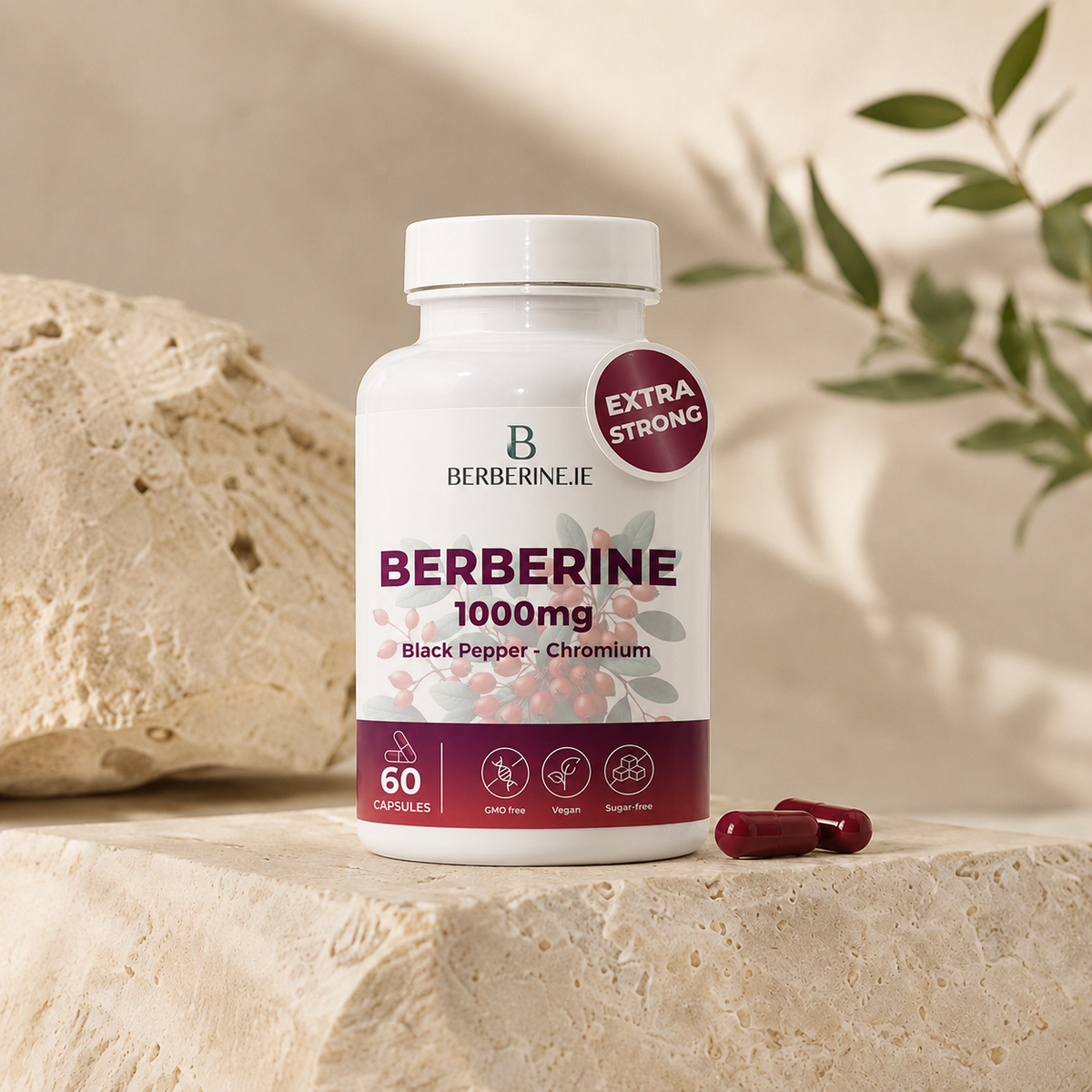
Our label says two capsules daily, with a meal and water. Take them at whichever meal you reliably eat, and then stay with it. Consistency is what matters here, not the hour on the clock, because no time of day has been shown to be better than another for berberine. Below is how to build a routine that survives a busy week.
Key takeaways
- Our recommended use is two capsules daily, with a meal and water. The physical label on your pack is always the instruction that counts.
- Anchor the capsules to a meal you rarely skip. A meal is a far more reliable cue than a clock time.
- Morning or evening is a scheduling choice, not a health one. Pick the slot you will still be keeping in three weeks.
- If you miss a day, go back to the normal daily portion next time. Never double up to catch up.
- Anyone taking medication or living with a medical condition should speak to their GP or pharmacist before use.
On this page
What the label says
For our product the recommended use is two capsules daily, taken with a meal and water, and a bottle contains 60 capsules. That is 1,000 mg of berberine per daily serving, and a 30-day supply per bottle.
Every supplement sold in Ireland has to carry this information. Under the rules the Food Safety Authority of Ireland sets out, a supplement label must state the portion recommended for daily consumption and must carry a warning not to exceed it. So whatever any article says, including this one, read the pack in front of you. Labels can be revised between production runs, so it is worth a glance each time you open a new bottle. If any of the wording is unfamiliar, our guide to reading food supplement labels in Ireland works through each mandatory statement.
Building a routine you will actually keep
The real problem with a daily supplement is not timing. It is remembering. Adherence, meaning whether a person actually follows the instructions as written, is a recognised practical issue across supplements and medicines alike, and the techniques that fix it are pleasantly boring.
Habit stacking is the most useful of them. Instead of trying to remember a new standalone task, attach it to something you already do without thinking. Our label specifies taking the capsules with a meal, which hands you the anchor for free. You are not adding a new event to your day, you are adding a step to one that already happens.
Put the bottle where the anchor happens. Seeing it is the reminder. The label also requires storage out of the reach of young children, so a high press near the kitchen usually beats an open countertop.
Use an alarm only as a backstop. If your week is irregular, a repeating phone alarm set to your usual mealtime catches the days that get away from you. It works better as a safety net than as the main system.
- Read the physical label and confirm the stated daily portion.
- Pick one meal a day as your anchor and stay with it.
- Store the bottle where you will see it at that meal, out of reach of children.
- Have water with it, as our label specifies.
- Set a repeating alarm if your routine is irregular.
- Write the open date on the bottle so you know when a reorder is due.
- Never take more than the stated recommended daily dose to make up for a missed day.
That last habit is worth two seconds of pen work. Noting the open date makes it easy to see how long a bottle lasts and when to reorder.
A simple routine planner
Find the row that matches your week. No row is better than another, they just fail in different ways, so the useful column is the last one.
| Daily anchor | Suits you if | Common failure point | Practical fix |
|---|---|---|---|
| Breakfast at home | You eat at roughly the same time each morning | Rushed or skipped breakfast | Keep the bottle beside the kettle or in the breakfast press |
| Midday meal | You take a predictable lunch break | Bottle is at home when you are at work | Pick one fixed location and keep the bottle there permanently |
| Evening meal | Your main meal is at the end of the day | Late or irregular dinners | Set a repeating alarm at your earliest usual mealtime |
| Shift or rotating pattern | Your working hours change week to week | No stable clock time exists | Anchor to the meal itself rather than to a time, and keep a simple checklist |
| Travelling or away from home | You are out of your usual routine for days at a time | Bottle left behind, or time zones shift the anchor | Pack the original labelled bottle with your toothbrush and keep anchoring to a meal |
If you miss a day
Go back to the normal daily portion at your usual anchor. Do not take extra capsules the next day to compensate, because that would exceed the stated recommended daily dose the label warns against.
If you find yourself missing days often, the fix is almost always the anchor rather than willpower. Move the routine to a meal you never skip, and move the bottle to where that meal happens.
Morning or evening, honestly
People ask this constantly, so here is the plain position. Human studies of berberine have generally tested a daily amount over a period of weeks rather than comparing an 8am dose against an 8pm one, so there is no reliable published evidence isolating time of day, and we are not going to fill that gap with a confident rule.
What can be said is practical. A morning slot is easy to attach to breakfast and hard to forget. An evening slot suits people who eat their main meal at the end of the day and are rarely home at breakfast. Those are scheduling observations, not health statements, and the better slot is simply the one you will still be doing in three weeks. For the related question of why the label mentions a meal at all, see our guide on taking berberine with food.
When to ask a GP or pharmacist
Timing stops being a scheduling question and becomes a clinical one the moment other medicines are involved, and that is a conversation for a healthcare professional rather than a website. Berberine has recognised interaction potential, so if you take anything prescribed or over the counter, ask your pharmacist before starting and bring the actual bottle so the full ingredient list can be read. NHS guidance on herbal remedies and dietary supplements makes the same point about telling your healthcare team what you are taking. Our guides on berberine and medicines and berberine side effects and safety set out the documented issues, including the EU safety review that is currently under way.
You can also read the full ingredient and serving information for our berberine supplement before you buy, so you know exactly what the label will say.
Frequently asked questions
Is there a best time of day to take berberine?
No time of day has been established as best. Published human research has generally tested a daily amount over a period of weeks rather than comparing morning against evening dosing, so there is no evidence base to draw a timing rule from. Follow the directions on your physical label and pick a consistent daily slot that fits your routine. For our product that is two capsules daily with a meal and water.
Should I take both capsules together or split them?
Follow the physical label. Ours states two capsules daily, taken with a meal and water. If the wording on your own pack is unclear, or you are thinking of deviating from it for any reason, ask your pharmacist rather than following advice from an article. Do not exceed the stated recommended daily dose in any case.
Does it matter if I take it at a different time each day?
The practical downside of an irregular time is simply that it is easier to forget, and we cannot claim any effect beyond that. Anchoring the capsules to a meal you reliably eat tends to work better than anchoring to a clock time, particularly for shift workers whose hours move week to week.
What should I do if I forget a dose?
Return to your normal daily portion at the next usual time. Do not take extra capsules to make up for the one you missed, because that would exceed the stated recommended daily dose the label warns against. If forgetting is a regular occurrence, move your routine to a more reliable anchor, such as a meal you never skip, or set a repeating alarm.
How do I keep the routine while travelling?
Pack the original labelled bottle rather than decanting capsules, so the ingredient list and stated daily portion travel with you, and keep it out of reach of children. Keep anchoring to a meal rather than a clock time, which handles time zone changes automatically. Count the days you will be away so you bring enough.
Can I take it at the same time as my prescription medicines?
Ask your GP or pharmacist before combining anything with prescribed medication. Berberine has documented interaction potential, including with cyclosporine, and regulators have flagged that it may affect enzymes involved in metabolising some drugs. Bring the physical bottle to the appointment so the full ingredient list can be checked. This is not a question an article can answer for your individual situation.
How long should I stay on a routine before changing it?
If a slot is not working, meaning you keep forgetting it, change it now rather than waiting. That is a question about your habits, not about the product, and we cannot attach any expected outcome to it. If you are asking because you are wondering what to expect from the product itself, that is a discussion for your GP or pharmacist.
Sources and further reading
- Food Safety Authority of Ireland. Food Supplements: business advice and labelling requirements. fsai.ie Accessed 13 August 2026.
- Guy's and St Thomas' NHS Foundation Trust. Herbal remedies and dietary supplements. guysandstthomas.nhs.uk Accessed 13 August 2026.
- National Center for Complementary and Integrative Health (NIH). Berberine and Weight Loss: What You Need To Know. nccih.nih.gov Accessed 13 August 2026.
- Health Products Regulatory Authority. Medicines safety information. hpra.ie Accessed 13 August 2026.